Small Fish
With acknowledgments to Roald Dahl.

My name is Tāne Haora and I am eight years old and I live in a house by Te Awanui, the harbour in Tauranga, and I have a magic finger.
I have always had it. My nan says it was given to me by Tangaroa.
The magic finger is not on my left hand and it is not on my right hand. It is in between, which is impossible, I know, but that is where it is. When I get very very mad about something, the finger goes all hot and tingly, like touching a live wire, and then something happens to the person I am mad at.
Something always happens.

I was mad at Shane Jones.
I had been mad at him since Dad came home from fishing with nothing and said it was because the big boats had been through again, dragging everything, taking the babies. Shane Jones, Dad said, was going to make it so the big boats could keep all the baby fish. Every single one. Even the ones no bigger than your thumb.
“But they haven’t grown yet,” I said.
“That’s the point,” said Dad. He looked very tired.
“That’s stupid,” I said.
“Yes,” said Dad.
I went to bed thinking about it. I thought about the little snapper no bigger than my hand. I thought about how they needed to grow. I thought about Shane Jones going around calling himself a fishing apostle, which Dad had looked up on his phone and read aloud and then laughed in a way that wasn’t funny.
My finger went tingly.
I tried not to let it.
But then in the morning I saw a photo of Shane Jones on Dad’s phone. He was standing on a boat looking very pleased with himself, wearing a big jacket, and the headline said he was too busy to answer questions about the fish because he was busy with something else entirely.
The tingling got very bad.
I thought: No. Don’t.
But the finger was already hot.
Shane Jones woke up on Thursday and felt strange.
He felt small.
Not metaphorically small, the way people sometimes say a person has been made to feel small by a harsh word or a difficult meeting. He felt physically, actually, measurably small. He reached out to tap his bedside lamp and his arm was too short. He reached further and fell out of bed entirely.
He landed with a very soft thud on the carpet and lay there blinking at the ceiling, which was very far away.
He was, he realised, approximately twelve centimetres long.
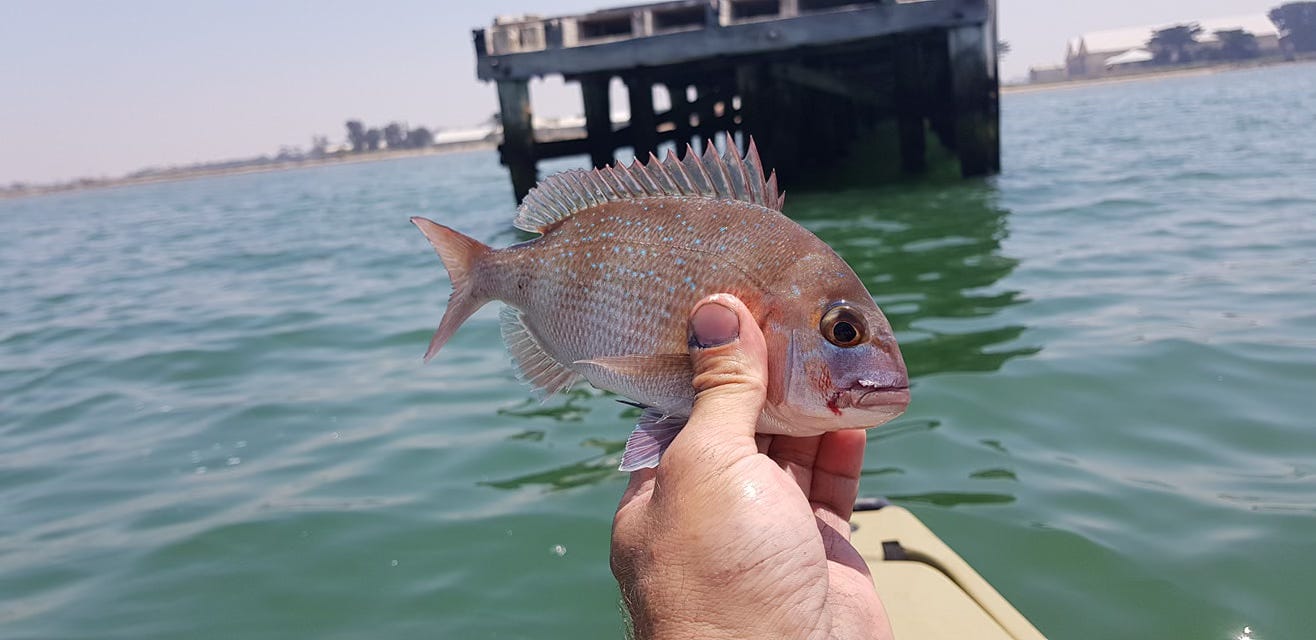
He was also, he noticed next, a snapper.
Not a large snapper. A small, juvenile snapper, with iridescent scales the colour of a sunset over the Hokianga, and large eyes that were perfect for seeing in the dark of deep water but not especially useful for reading cabinet papers. He flapped experimentally on the carpet.
This was not ideal.
Shane Jones’ office tried to reach him at nine-fifteen. Then again at nine-twenty. Then nine-thirty. His chief of staff called seven times. His spokeswoman, who had been telling journalists he was “busy with fuel issues,” called twice more and then stopped because she had no idea what else to say.
He was, at this point, on the kitchen floor, having flopped there in search of water.
He found a bowl of water on the floor that belonged to the family’s dog and got into it, which helped, but not enormously, as it was not salt water and Shane Jones had become a saltwater fish.
He lay in the bowl feeling his gills work and thought about things.
He thought about the Fisheries Amendment Bill.
He thought about minimum size limits.
He thought about the fact that he was currently below the minimum size limit for snapper, which meant that if a recreational fisher happened to catch him, they would be required by law to throw him back.
Commercial boats would not have the same obligation. Under the new bill, they could keep him.
He flapped unhappily.
By eleven o’clock a member of the household had found him, screamed, and called her husband. The husband came and looked at him for a long time and said: “That’s a snapper.”
“I can see it’s a snapper,” said the wife. “Why is there a snapper in the dog’s bowl?”
The snapper looked at them very hard.
“It’s small,” said the husband. He measured Shane Jones with a ruler from the junk drawer. “Twelve centimetres. The limit’s thirty.”
There was a pause.
“Throw it back?” said the wife.
“Back where? We’re in Thorndon.”
Another pause.
“The harbour,” said the husband, after some thought. “We should drive it to the harbour.”
They put Shane Jones in a bucket with some cold water and drove him to the waterfront in Wellington. He sloshed about and thought very hard about policies. He thought about deemed value. He thought about what it was like to be small and alive and in a bucket, entirely dependent on the goodwill of strangers who had no legal obligation to him at all.
He thought about the niche overseas markets.
He flapped very hard.
At the harbour, the man held him gently over the side of a railing, and Shane Jones hung there for a moment in his large hand, very small, looking down at the green water.
“Off you go then,” said the man.
He let go.
Shane Jones was himself again by lunchtime.
He sat at his desk for a long time without calling anyone. His phone had seventeen missed calls. His spokeswoman knocked twice and he said nothing.
He pulled up the draft of the Fisheries Amendment Bill on his computer.
He read it for a while.
Then he opened a new document and began to type.
He typed for quite a long time.
Nobody knows exactly what he wrote, because nobody was in the room. But his office did put out a press release that afternoon, and the press release said that the Minister was giving the bill “further consideration in light of emerging information,” and that “size limit provisions would be subject to review in consultation with recreational fishing representatives, iwi, and marine scientists.”
It was not a lot. It was not nearly enough.
But it was a start.
Down in Tauranga, I was eating breakfast when Dad came in and read something on his phone and looked up with an expression I hadn’t seen in a while.
“Huh,” he said.
“What?”
“Jones is backing off the size limits. Says he’s reconsidering.”
I drank my Milo.
“Interesting,” I said.
My finger felt quite cool. Quite normal.
I looked at it.
It looked back.
For now, it said. For now.
The inspiration for those unfamiliar with the story is The Magic Finger, by Roald Dahl - along with his other short story that has stuck with me for 40+ years since I also read The Sound Machine, another classic in the same Rights of Nature vein.
Great story! Thanks. ☺️
Brilliant. Just brilliant.